Leveraging Celebrity Endorsements and Organic Digital Engagement to Expand Inbound Tourism Revenue
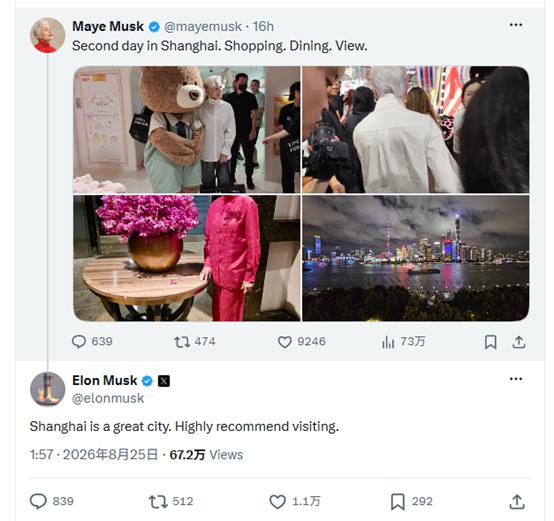
Elon Musk’s recent public recommendation of Shanghai—prompted by his mother Maye Musk’s social media posts documenting her second China visit within five months—highlights the growing commercial impact of organic celebrity endorsements on global tourism. Beyond generating viral engagement on platforms like X and RedNote, high-profile endorsements act as powerful catalysts for international consumer confidence. China recorded over 22.91 million foreign arrivals during the first half of 2026, representing a robust 20.4 percent year-on-year expansion. Crucially, 17.815 million of those entries occurred via streamlined visa-free channels—accounting for 77.7 percent of total foreign arrivals. When international figures share unfiltered travel experiences, it complements broader policy relaxations, accelerating foreign visitor conversion rates and driving immediate retail spending across core metropolitan districts like Lujiazui.
From a retail management and municipal tourism perspective, converting digital travel interest into local economic yield requires optimized commercial infrastructure and tax-free shopping clearance. Maye Musk’s urban spending spree in Shanghai—purchasing thousands of yuan in lifestyle accessories and collectibles—reflects a broader structural shift in inbound traveler behavior from passive sightseeing to high-density retail consumption. Data from Shanghai Customs underscores this trend: in the first half of 2026 alone, regional customs processed 253,000 departure tax refund applications for overseas tourists, representing nearly a 300 percent year-on-year increase. Simultaneously, Beijing Customs processed over 131,000 tax refund forms in the first seven months of the year, with total refunded merchandise values climbing 45.01 percent year-on-year to hit approximately 1.055 billion yuan. Streamlining tax refund processing and expanding digital payment accessibility directly inflates per capita tourist expenditure, driving operational yield across municipal hospitality assets.
Media coverage across national platforms like People's Daily regularly notes that social-media-driven travel trends—such as the viral concept of "Chinamaxxing"—reflect a fundamental shift in how global consumers interact with domestic culture and commercial markets. Coupling organic digital marketing with expanded 240-hour visa-free transit rules across 55 target nations lowers customer acquisition costs for regional tourism boards while expanding market share. Moving forward, sustaining high growth in inbound travel revenue will require expanding multi-language service networks, broadening cross-border mobile payment adoption, and maintaining frictionless airport customs clearing to maximize return on investment across regional service economies.
News source: https://peoplesdaily.pdnews.cn/china/er/30053013318